
 Cholid Fahmi Thalib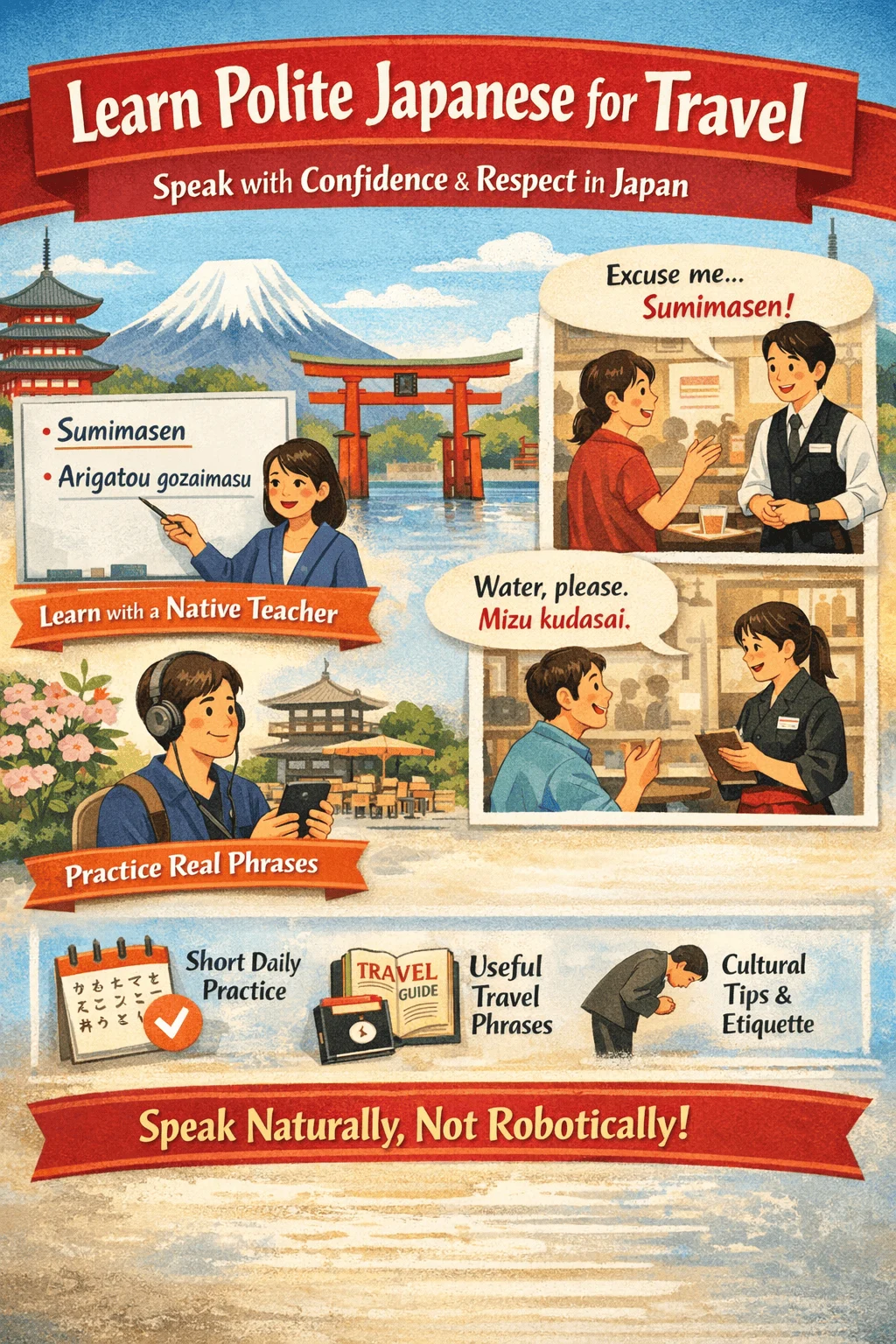
Traveling in Japan offers an immersive experience, but navigating its rich cultural landscape is significantly enhanced by the ability to communicate with respect and confidence. While extensive phrase memorization often leads to stilted or unnatural interactions, a more effective approach focuses on practical conversations and essential politeness, fostering genuine connection and deeper understanding. This article explores strategies for travelers to acquire functional polite Japanese, emphasizing context-driven learning and cultural nuances over rote memorization.
The allure of Japan, with its blend of ancient traditions and cutting-edge modernity, draws millions of visitors annually. Data from the Japan National Tourism Organization (JNTO) consistently shows a growing interest in inbound tourism, with pre-pandemic figures highlighting over 31 million international visitors in 2019. Post-pandemic recovery has seen a resurgence, with JNTO reporting approximately 25 million visitors in 2023, indicating a strong return of global interest. For these travelers, the ability to engage politely in Japanese not only smooths daily interactions, such as ordering meals or seeking directions, but also demonstrates a fundamental respect for the host culture, which is highly valued in Japan.
The challenge for many travelers lies in the perceived complexity of the Japanese language, particularly its honorific systems and nuanced politeness levels. Traditional language learning methods, often centered on grammar drills and vocabulary lists, can feel overwhelming and disconnected from real-world application. This disconnect can lead to a reliance on phrasebooks or translation apps, which, while useful, can sometimes result in interactions that feel transactional rather than relational. The key to overcoming this hurdle lies in shifting the learning paradigm from exhaustive memorization to strategic, practical application.
The Importance of Contextual Learning in Polite Japanese
Learning polite Japanese is not merely about acquiring a set of phrases; it is about understanding the underlying principles of respect and social harmony that permeate Japanese communication. The concept of keigo (polite language) is deeply ingrained in the culture, reflecting social hierarchies, relationships, and the specific context of an interaction. For travelers, mastering the basics of keigo can unlock more meaningful experiences and foster positive relationships with locals.
Many travelers find that relying solely on guidebooks or generic audio courses provides only a superficial understanding. These resources often present phrases in isolation, without the crucial context of when and how to use them appropriately. This is where personalized guidance can be invaluable. Engaging with a qualified Japanese language instructor specializing in travel preparation, for instance, offers a tailored approach. Such instruction can clarify the subtleties of tone, etiquette, and appropriate language for common travel scenarios, such as checking into accommodations, navigating public transportation, or dining out. This targeted approach ensures that learners focus on practical, high-frequency language that will be directly applicable during their trip, rather than expending effort on phrases they are unlikely to encounter or use.
The efficacy of short, consistent practice cannot be overstated. Rather than attempting to absorb vast amounts of information at once, breaking down learning into manageable daily sessions and focusing on exposure to polite Japanese in authentic contexts leads to better retention. Hearing polite phrases used naturally in real-life situations allows learners to internalize the rhythm, intonation, and structure of the language. This exposure-based learning cultivates an intuitive understanding of politeness, enabling travelers to respond with confidence and spontaneity, moving beyond the limitations of rehearsed, robotic speech.
Key Takeaways for Effective Japanese Language Acquisition for Travelers
- Prioritize practical phrases: Focus on high-frequency expressions relevant to common travel scenarios.
- Embrace contextual learning: Understand phrases within their social and situational context.
- Engage in consistent, short practice: Daily exposure and active use reinforce learning more effectively than sporadic, intensive study.
- Seek personalized guidance: Consider working with an instructor for tailored advice on etiquette and appropriate language use.
- Integrate cultural nuances: Combine language learning with an understanding of non-verbal communication and social customs.
Mastering Essential Polite Japanese Quickly
Developing practical speaking skills in polite Japanese for travel purposes can be achieved by concentrating on core courtesy phrases, essential greeting patterns, and brief, impactful expressions for unexpected or sensitive situations. This focused approach builds confidence for navigating daily life in Japan without the burden of memorizing extensive vocabulary lists.
Most-Used Courtesy Phrases and Their Functions
Certain polite words are foundational to nearly every interaction in Japan. The word Sumimasen is exceptionally versatile, functioning as both "excuse me" and "sorry." It serves as an indispensable tool for gaining someone’s attention, politely interrupting, or offering a mild apology for a minor inconvenience. For instance, to get the attention of a waiter, a simple sumimasen is more appropriate than a direct call.
Kudasai is the standard polite way to say "please" when making a request. Combining it with a noun forms a polite request, such as mizu kudasai (water, please) or ocha kudasai (tea, please). Understanding its placement after the noun is key to its correct usage.
Expressions of gratitude and formal requests also carry significant weight. Arigatou gozaimasu is the formal and widely used way to say "thank you very much," conveying a deeper level of appreciation than the informal arigatou. Similarly, Onegaishimasu functions as a more formal "please" or "I request," often used when placing an order or asking for a service. For example, when ordering a meal, one might say, "Kore o onegaishimasu" (This one, please). The distinct function of each phrase aids in memorization through practical application rather than abstract study.
To achieve a natural cadence, paying attention to tone and timing is crucial. Polite Japanese is often accompanied by a softer vocal delivery and, in many situations, a subtle bow or nod. In commercial settings like shops or restaurants, the repeated, natural use of simple travel phrases like sumimasen or arigatou throughout the day reinforces these basics and builds comfort. These small habits are instrumental in strengthening a traveler’s foundational understanding and application of polite Japanese.
Strategic Greetings for Different Situations
Japanese greetings are designed to convey respect and acknowledge the time of day and the specific setting. The standard greetings are:
- Ohayou gozaimasu: Used in the morning (generally until around 10 or 11 AM).
- Konnichiwa: The most common greeting for the daytime (from late morning to late afternoon).
- Konbanwa: Used in the evening.
Mastering these simple adjustments in timing allows travelers to align with local customs effortlessly, signaling awareness and politeness.
When departing, Sayonara is a common translation for "goodbye." However, in everyday interactions, locals often opt for more casual or specific farewells depending on the relationship. Among friends, jaa ne (see you) or mata ne (later) are frequent. For more polite or formal farewells in public spaces or when leaving a business establishment, phrases like Shitsurei shimasu (Excuse me for leaving/disturbing) or Dewa mata (See you later) are more appropriate. Each phrase has an optimal context, preventing the traveler from sounding inappropriately formal or overly casual.
The act of greeting in Japan is intrinsically linked to omotenashi, the concept of selfless hospitality and thoughtful service. Returning a greeting with genuine warmth and sincerity is a powerful way to show respect for the culture. A simple smile and a nod can bridge communication gaps where full linguistic fluency may not yet exist, enhancing the overall interaction.
Minimal Phrases for Emergencies and Apologies
In the event of unexpected difficulties during travel, a few brief, critical expressions can be vital. For urgent assistance, Tasukete! translates directly to "Help!" For navigational emergencies, knowing how to ask "Where is the hospital?" is crucial: Byouin wa doko desu ka? Having these concise phrases readily accessible can make a significant difference in critical moments.
When acknowledging mistakes or causing inconvenience, reiterating Sumimasen is a common and effective approach. For a more pronounced apology, Gomen nasai can be used. These polite expressions convey responsibility and regret without necessitating lengthy explanations.
Travelers are advised to compile a short list of essential emergency phrases before their trip:
- Help! – Tasukete! (たすけて!)
- Where is the hospital? – Byouin wa doko desu ka? (びょういんはどこですか?)
- I am lost. – Michi ni mayoi mashita. (みちにまよいました。)
- Please call the police. – Keisatsu o yonde kudasai. (けいさつをよんでください。)
- I don’t understand. – Wakarimasen. (わかりません。)
These minimal yet powerful phrases enable clear and respectful communication under pressure, upholding the courtesy that is so highly valued in Japanese language and culture.
Effective Learning Methods for Travelers
Acquiring polite and functional Japanese for travel purposes does not necessitate extensive academic study. By concentrating on practical expression, real-world application, and the adoption of simple, consistent habits, travelers can gain proficiency efficiently. Paying close attention to natural speech patterns and understanding the cultural context of communication are key to sounding more respectful and exuding confidence during travels in Japan.
Memorization-Free Techniques for Rapid Results
To circumvent the need for exhaustive vocabulary lists, learners can embrace contextual learning. This involves engaging with short, authentic conversations, such as those encountered when asking for directions or ordering food. Repeated exposure to these concise, practical phrases accelerates memory retention far more effectively than rote memorization. This method also naturally teaches how polite words integrate into actual dialogue.
Breaking down learning into manageable objectives is another effective strategy. For instance, a traveler might set small, achievable goals:
- Day 1-3: Master basic greetings and sumimasen/arigatou gozaimasu.
- Day 4-7: Learn phrases for ordering food and drink, and asking for directions.
- Week 2: Focus on phrases for shopping and checking into hotels.
The technique of shadowing, where learners repeat short audio clips aloud immediately after hearing them, significantly improves accent and intonation without the strain of memorization. With consistent practice, the ear becomes attuned to recognizing polite and casual forms naturally, fostering intuitive language acquisition.
Leveraging Japanese Writing Systems for Politeness
An understanding of the Japanese writing system can significantly enhance the ability to recognize and utilize polite language. Beginning with hiragana is foundational, as this phonetic script is used to write native Japanese words, including polite grammatical endings and common expressions. Following this, learning katakana is beneficial for recognizing foreign loanwords that appear frequently on signage and menus. Subsequently, focusing on essential kanji for everyday use, such as those representing concepts like "day" (日 – hi), "eat" (食 – tabe), or "go" (行 – i), provides further depth.
Each writing system offers clues about tone and formality. For example, kanji often appear in more formal contexts, such as official signs or business establishments. Recognizing these characters in conjunction with polite phrases helps learners deduce meaning through context rather than solely relying on memorized vocabulary.
Maintaining a small notebook or a digital note-taking application to record useful symbols and phrases encountered in real-life situations can be highly effective. This method links visual memory with practical application, reinforcing learning in a tangible way.
Using Technology and Cultural Tools
Modern language apps and digital tools offer a streamlined pathway to refining Japanese language skills. Speech recognition technology allows learners to practice pronunciation and receive immediate feedback, correcting errors in real-time. Translation tools, such as Google Translate, can serve as valuable aids for checking grammar and understanding nuances of tone, but it is crucial to always test phrases aloud to gauge their naturalness.
Audio-based learning platforms that offer slow playback capabilities can significantly enhance listening comprehension. These can be effectively paired with short role-playing exercises, simulating scenarios like seeking assistance at a train station or ordering tea at a café.
Beyond linguistic tools, integrating cultural practices into communication is paramount. A slight bow, the use of honorific suffixes like -san (a general polite suffix attached to names), and demonstrating patience are non-verbal cues that underscore respect and contribute significantly to positive interactions. Combining these small acts of cultural etiquette with basic Japanese phrases creates a more harmonious and respectful exchange, demonstrating a genuine effort to connect with the local culture.
In conclusion, speaking polite Japanese effectively during travel is achievable without the arduous task of memorizing exhaustive lists. The focus should remain on phrases directly relevant to everyday travel needs, such as greetings, requests, and expressions of gratitude. Consistent application in real-life situations ensures these phrases become internalized and readily accessible.
Practicing small sets of words and deliberately using them throughout one’s trip, for instance, by saying "arigatou" (thank you) or "sumimasen" (excuse me) at appropriate junctures, helps cultivate respectful communication. Local residents often place a higher value on the effort and sincerity demonstrated by a traveler than on perfect grammatical accuracy. This consistent effort rapidly builds confidence.
Observing how native speakers communicate, paying attention to their tone, intonation, and accompanying gestures, provides invaluable insights into what sounds natural. Over time, these observations evolve into ingrained habits, making polite speech a natural component of the traveler’s repertoire.
Ultimately, the most effective approach is to learn through active use rather than passive memorization. By prioritizing meaningful phrases, engaging in real interactions, and maintaining patience with the learning process, travelers can steadily gain both comfort and respect as they explore the wonders of Japan. This journey of linguistic and cultural immersion promises to be profoundly rewarding.



 Anjar Salim
 Chandra Hamzah
 Tatiana Tantri Indah Sari
 Budi Mulyono
 Lukman Taruna Persada Ramadan
