
 Budi Mulyono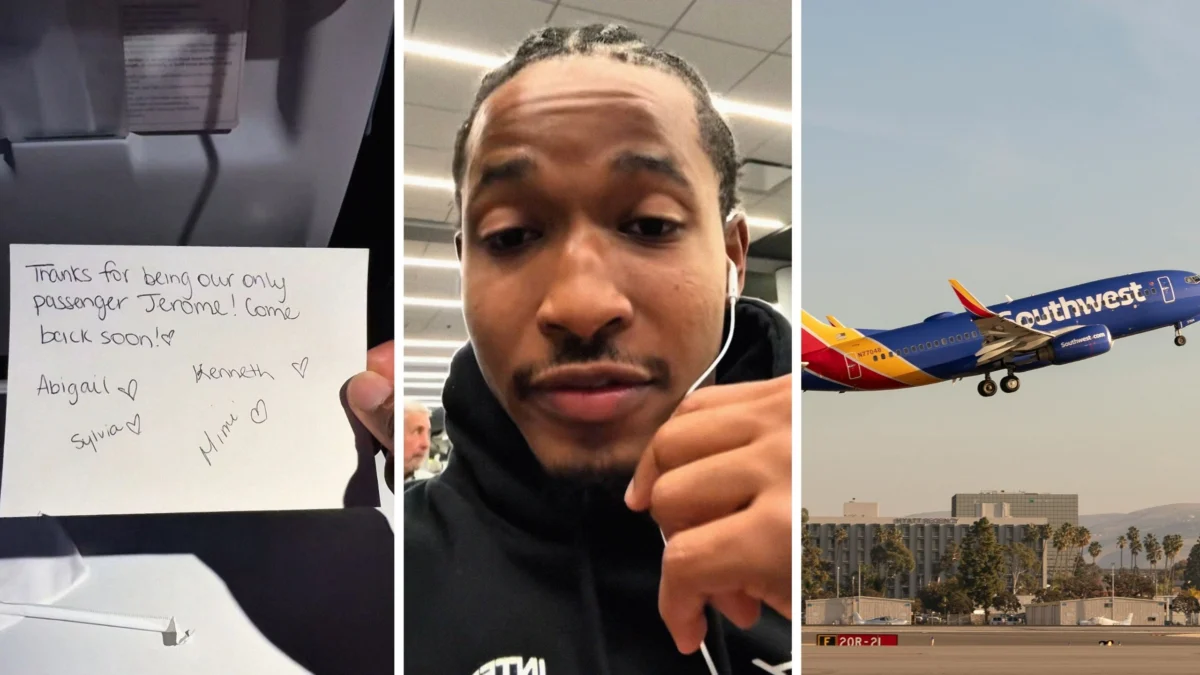
In an era defined by crowded terminals, overbooked cabins, and the logistical complexities of modern aviation, the prospect of a private flight is often reserved for the global elite. However, for Jerome Stone, a fitness professional traveling from Chicago to Orlando, this luxury became an unexpected reality on a standard commercial service operated by Southwest Airlines. While the flight was scheduled as a routine passenger operation, Stone discovered upon boarding that he was the sole occupant of the aircraft, effectively transforming a standard narrow-body jet into a private transport.
The incident, which gained significant traction on social media, highlights the intricate logistical maneuvers airlines must perform to maintain network integrity, even when passenger demand for a specific leg of a journey is non-existent. Stone, who documents his life under the social media handle @jeromestone3, captured the experience in a series of videos that provide a rare glimpse into the operations of a "flight of one."
The Chronology of a Solitary Departure
The event began at a Chicago-area airport—likely Midway International Airport, a primary hub for Southwest Airlines—where Stone was waiting to board his flight to Orlando. As the boarding process commenced, it became clear that the usual crowds associated with the Chicago-to-Florida corridor were absent. Upon entering the aircraft, a Boeing 737, Stone was greeted by a full flight crew who informed him that he was the only passenger manifested for the trip.
Southwest Airlines typically operates aircraft with seating capacities ranging from 143 to 175 passengers, depending on whether the flight is serviced by a 737-700, 737-800, or a 737 MAX 8. For Stone, this meant having access to approximately 30 rows of seating and the undivided attention of the flight’s two pilots and three to four flight attendants.
The flight crew immediately leaned into the novelty of the situation. In the footage shared by Stone, crew members are seen treating him as a "VIP," maintaining professional standards while injecting a sense of celebratory hospitality. Despite the empty cabin, the crew performed the federally mandated pre-flight safety demonstrations, including the proper use of seatbelts and the location of emergency exits. Stone filmed the demonstration with amusement, noting the surreal nature of a full safety briefing conducted for a single individual.
Throughout the flight, the crew provided Stone with an elevated level of service. He was encouraged to sit in any seat he desired, eventually opting for an upgrade that allowed for maximum comfort. The service included a personalized selection of snacks and beverages, including a tequila cranberry cocktail, and even a whimsical gesture where a crew member fashioned a paper crown for him. Stone remarked that the experience gave him a "taste of his ultimate goal" of flying private, noting that while he lacked the "$20,000 to drop on a flight," the serendipity of the Southwest logistics provided a comparable experience.
Logistical Realities: Why Empty Planes Fly
The occurrence of a commercial flight carrying only one passenger often prompts questions regarding the economic and environmental efficiency of the airline industry. To the casual observer, flying a 100,000-pound aircraft over a distance of approximately 1,000 miles for a single customer appears to be a financial loss. However, aviation experts point to several critical factors that make such "ghostly" flights a necessity for major carriers.
One of the primary reasons is aircraft repositioning. Airlines operate on a highly synchronized "point-to-point" or "hub-and-spoke" schedule. An aircraft arriving in Orlando from Chicago is rarely scheduled to sit idle; it is likely slated for a subsequent flight from Orlando to another destination, such as Baltimore or Houston, that may be fully booked. If the airline cancels the empty Chicago-to-Orlando leg, the aircraft would not be in place for its next scheduled departure, causing a "daisy chain" of cancellations and delays across the entire network.
Furthermore, crew scheduling plays a vital role. The pilots and flight attendants on Stone’s flight were likely scheduled to work additional legs out of Orlando. Failing to fly the Chicago leg would mean the crew would be out of position, potentially leaving other flights without the necessary personnel to operate legally under Federal Aviation Administration (FAA) regulations.
Another significant factor is the transportation of "belly cargo." While the passenger cabin may be empty, the hold beneath the floorboards is often filled with revenue-generating freight. Data from the aviation industry suggests that the U.S. Postal Service and various private couriers lease space on thousands of scheduled passenger flights daily. For many airlines, cargo revenue can account for 5% to 10% of the total revenue for a flight, helping to offset the operational costs of the fuel and crew even when passenger ticket sales are low.
Official Responses and Corporate Culture
Southwest Airlines, known for its "Warrior Spirit" and emphasis on employee empowerment, responded to the event with characteristic hospitality. In a statement provided to BoardingArea, the airline emphasized that its employees are given "broad leeway to deliver hospitality, using their own creative spirit." This corporate philosophy was evident in the way the crew handled Stone’s flight, transforming a potentially awkward or sterile environment into a memorable customer service "win."
The airline’s official social media account also engaged with Stone’s video, commenting, "OUR VIP. Thanks for sharing the skies with us!!" This interaction underscores a growing trend where airlines use rare operational anomalies as marketing opportunities to demonstrate brand personality and customer care.
The crew’s decision to perform the full safety briefing and engage in "VIP" treatment is consistent with Southwest’s internal training, which encourages flight attendants to use humor and personal engagement to improve the passenger experience. For the crew, the flight represented a break from the high-stress environment of a packed cabin, allowing them to focus their professional duties on a single individual while maintaining the rigorous safety standards required by law.
Technical and Financial Implications
Operating a Boeing 737 involves significant costs. According to data from airline financial analysts, the cost of operating a narrow-body jet can range from $3,000 to $6,000 per block hour, factoring in fuel, maintenance, crew wages, and insurance. A flight from Chicago to Orlando typically takes approximately two and a half hours, suggesting an operational cost in the neighborhood of $10,000 to $15,000.
While the revenue from a single passenger ticket—even a last-minute, full-fare ticket—cannot cover these costs, the "opportunity cost" of canceling the flight is much higher. If Southwest had canceled the flight, they would have been responsible for rebooking Stone on a competitor, potentially paying for his overnight accommodations, and, most importantly, losing the revenue from the subsequent flights the aircraft was scheduled to perform. In the high-stakes world of airline logistics, flying one person to Florida is often the most fiscally responsible decision available to the operations desk.
The Broader Context of "Flights of One"
While Jerome Stone’s experience is rare, it is not unprecedented. The aviation industry saw a spike in near-empty flights during the early stages of the COVID-19 pandemic, when travel demand plummeted but airlines continued to fly to maintain "slots" at restricted airports or to fulfill government-subsidized service requirements.
In recent years, similar stories have emerged. In 2023, a passenger named Phil Stringer made headlines for being the only person on an American Airlines flight from Oklahoma City to Charlotte after an 18-hour delay caused all other passengers to rebook or give up. Like Stone, Stringer’s experience was characterized by a festive atmosphere shared with a supportive crew.
However, these incidents also invite scrutiny regarding the environmental impact of aviation. The carbon footprint of a single passenger on a commercial jet is significantly higher than that of a passenger on a full flight. As the industry faces increasing pressure to meet sustainability goals, the practice of flying empty or near-empty aircraft—often referred to as "ghost flights"—has become a point of contention among environmental advocates and European regulators. In the United States, the focus remains primarily on the logistical necessity of maintaining a reliable national transportation infrastructure.
Conclusion: A Rare Convergence of Luck and Logistics
For Jerome Stone, the flight from Chicago to Orlando was more than just a trip home; it was a rare convergence of airline logistics and personal luck. His story serves as a reminder of the massive, often invisible machinery that keeps the skies moving. Behind every empty seat is a complex calculation of crew hours, aircraft positioning, and cargo commitments.
As Stone concluded his journey, he expressed a renewed loyalty to the carrier, stating, "Shout out to the crew and shout out to Southwest, I’ll definitely be flying again." While he may never again have an entire Boeing 737 to himself, the experience remains a testament to the unpredictable nature of modern travel and the ability of a dedicated crew to turn a logistical quirk into a "one-in-a-million" memory. For the aviation industry, it remains a case study in how brand reputation can be bolstered by empowering employees to treat every passenger—whether they are one of 175 or the only one on board—as a VIP.




 Anjar Salim
 Chandra Hamzah
 Tatiana Tantri Indah Sari
 Lukman Taruna Persada Ramadan
