
 Walid Sujud Trenggono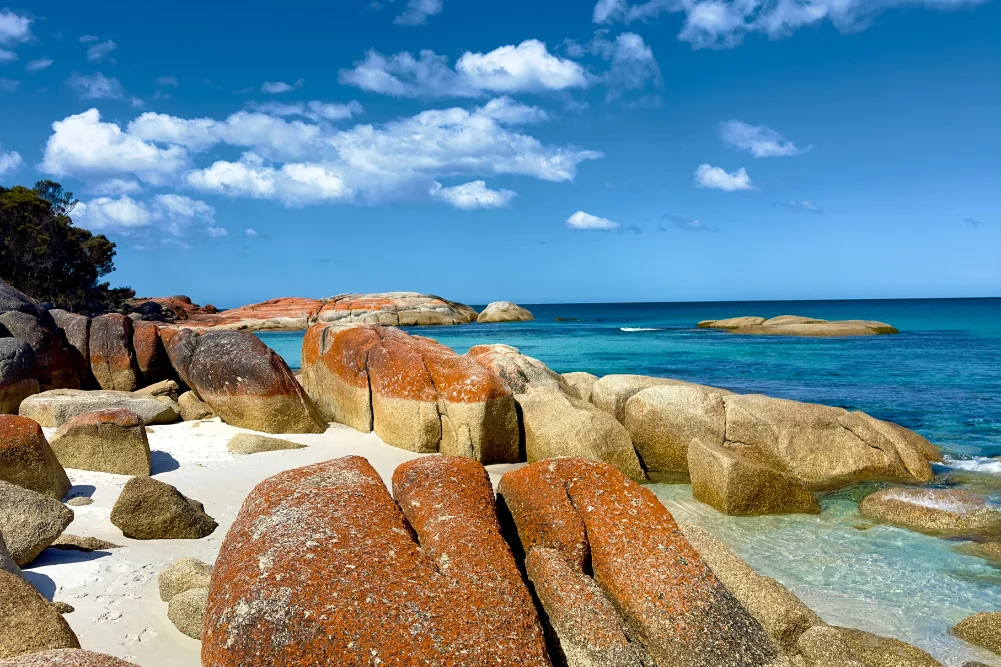
The Bay of Fires, situated on the northeastern coast of Tasmania, has long been regarded as one of the premier hiking destinations in the Southern Hemisphere. Known to the traditional Palawa owners as Larapuna, this stretch of coastline recently received the distinction of being named Australia’s most beautiful beach for 2025. This recognition underscores a growing trend in the Australian tourism sector: the rise of "soft adventure" travel. This niche caters to a demographic that seeks immersive wilderness experiences without sacrificing the comforts of modern hospitality, such as climate-controlled accommodations, chef-prepared meals, and professional logistical support.
Guided expeditions, such as those operated by Intrepid Travel, have become a cornerstone of the Tasmanian regional economy. These tours offer a structured three-day itinerary that traverses the Humbug Point Conservation Area and Mount William National Park. By providing participants with professional guides, transport, and high-end lodgings in the town of St Helens, these programs lower the barrier to entry for older hikers and international tourists, contributing to the state’s goal of becoming a global leader in sustainable nature-based tourism.
Historical and Geological Context of the Bay of Fires
The nomenclature of the Bay of Fires dates back to 1773, when Captain Tobias Furneaux, sailing on the HMS Adventure, observed numerous fires along the coastline. These fires were the campfires of the Palawa people, who have occupied the region for over 6,000 years. Today, the "fire" of the coastline is most visible in the vibrant orange lichen (Caloplaca marina) that blankets the massive granite boulders lining the shore. This lichen, a symbiotic partnership between a fungus and an alga, thrives in the nutrient-rich sea spray and creates a striking visual contrast against the region’s characteristic white quartz sands and turquoise waters.
Geologically, the region is dominated by Devonian granite, which has been sculpted by millennia of Southern Ocean swells and wind erosion. The resulting landscape features a complex ecosystem of coastal heath, sclerophyll forests, and sand dunes that reach several meters in height. This environmental diversity supports a wide array of endemic Tasmanian fauna, making it a critical area for biodiversity conservation.
Chronology of the Three-Day Expedition
The standard guided itinerary begins in Launceston, Tasmania’s second-largest city and a primary gateway for northern tourism. From there, participants are transported to St Helens, the administrative and commercial hub of the Break O’Day Council.
Day One: The Humbug Point Conservation Area
The initial phase of the trek focuses on the Skeleton Bay Track, leading toward Dora Point. This 2-hour introductory hike serves to acclimate participants to the variable Tasmanian climate, which is notorious for rapid changes—often described by locals as "four seasons in one day." The Humbug Point Conservation Area acts as a buffer zone for the more remote sections of the coast, featuring a mix of paperbark forests, banksia, and tea trees. On this first day, hikers frequently encounter the "bulldozer of the bush," the common wombat (Vombatus ursinus), whose presence is marked by distinctive cubic scat used for territorial signaling.
Day Two: Eddystone Point and the Coastal Wilderness
The second day represents the most physically demanding portion of the journey, covering approximately 12 kilometers and an average of 25,000 steps. The trek commences at Eddystone Point, known as Larapuna to the traditional owners. The site is home to the Eddystone Point Lighthouse, a 35-meter pink granite tower completed in 1889 to mitigate the high frequency of shipwrecks in the treacherous waters of the Tasman Sea.
The route follows Eddystone Beach, where the landscape is characterized by high-velocity winds and shifting dunes. This section is a haven for avian enthusiasts; species commonly sighted include Pacific gulls, sandpipers, and the iconic oystercatcher, recognizable by its shrill call and vibrant orange beak. The beach is also noted for its vast shell coves, where deposits of cockle and clam shells can reach depths of several feet, providing a unique geological record of the area’s marine life.
Day Three: Mount William National Park
The final day of the expedition moves into Mount William National Park, established in 1973 to protect the habitat of the Forester kangaroo and other marsupials. The 6-kilometer loop around Stumpy’s Bay offers a final opportunity for wildlife sightings, including the Tasmanian echidna (Tachyglossus aculeatus setosus). The Tasmanian subspecies is notably larger and more hirsute than its mainland counterparts, an evolutionary adaptation to the island’s cooler temperatures. The journey concludes with a visit to the Little Blue Lake, a former tin mining site. The lake’s vivid cerulean color is a result of suspended clay particles—a legacy of the region’s industrial history in the late 19th and early 20th centuries.
Regional Economic Impact and Gastronomy
The success of guided hiking tours has a significant "halo effect" on the local economy of St Helens and the surrounding Fingal Valley. Traditionally a center for game fishing and timber, St Helens has successfully transitioned into a tourism-centric economy. The town is recognized as the game fishing capital of Tasmania, but it is the aquaculture industry that provides the most direct benefit to the trekking groups.
Local "Lease 65" oysters and southern rock lobsters are staples of the high-end dining experiences provided to hikers. This integration of local produce into the tourism package ensures that the economic benefits of the trails are distributed among local farmers, fishers, and restaurateurs. In Derby, a nearby town that was once a thriving tin mining center, the shift toward tourism is even more pronounced. Derby has rebranded itself as a world-class mountain biking destination, providing a "sweet finish" to regional tours with boutique gelato shops and cafes that occupy refurbished historic buildings.
Supporting Data: Tourism Trends in Northern Tasmania
According to data from Tourism Tasmania, the "Great Walks" and coastal trails are primary drivers for interstate and international visitation. In the year ending September 2023, Tasmania saw a significant recovery in visitor spending, with nature-based tourism accounting for a substantial portion of the $3.5 billion total visitor expenditure.
| Metric | Detail |
|---|---|
| Primary Demographic | 45–75 years old, high disposable income |
| Average Group Size | 10–12 participants |
| Seasonal Window | October to April (Peak: Dec–Feb) |
| Estimated Walking Distance | 35–45 kilometers over three days |
| Regional Employment | Supports guides, hospitality staff, and transport providers |
The data suggests that the "soft adventure" model—where the physical challenge is balanced by luxury amenities—is the fastest-growing segment of the market. This model appeals particularly to solo travelers and "active retirees," such as the 75-year-old participants mentioned in the Intrepid Travel group, who seek social interaction and professional safety nets while exploring remote terrain.
Conservation and Sustainable Management
The increased foot traffic in the Bay of Fires and Mount William National Park necessitates rigorous environmental management. The Tasmania Parks and Wildlife Service (PWS) monitors the impact of tourism on the fragile coastal heath and the lichen-covered granite. One of the primary concerns is the prevention of Phytophthora cinnamomi (root rot), a water mold that can devastate native vegetation. Guided groups are typically required to use boot-cleaning stations to prevent the spread of pathogens.
Furthermore, the management of the "Little Blue Lake" serves as a reminder of the environmental costs of past industries. While the lake is a popular photographic destination, its high acidity and mineral content make it unsuitable for swimming, highlighting the importance of factual education for tourists regarding the land’s history and current ecological state.
Broader Implications and Future Outlook
The Bay of Fires experience serves as a microcosm for the broader challenges and opportunities facing the Australian tourism industry. As climate change alters coastal landscapes through sea-level rise and increased storm intensity, the maintenance of iconic trails will require significant infrastructure investment. However, the continued demand for high-quality, guided wilderness experiences suggests that the economic incentive to protect these regions remains strong.
For the Palawa people, the ongoing management of Larapuna represents an opportunity for cultural resurgence and the sharing of traditional ecological knowledge. The integration of Indigenous history into the narrative of the Bay of Fires is essential for a holistic understanding of the landscape, moving beyond the colonial observations of Captain Furneaux to a deeper appreciation of a living culture.
In conclusion, the Bay of Fires is more than a scenic hiking trail; it is a sophisticated tourism product that balances environmental preservation with regional economic development. As it enters the 2025 season as Australia’s most celebrated beach, the focus remains on delivering an experience that is as educationally enriching as it is physically revitalizing. For the modern hiker, the appeal lies in the ability to stand on ancient granite, breathe the cleanest air in the world, and return at the end of the day to a standard of comfort that ensures the wilderness remains accessible to all.




 Anjar Salim
 Chandra Hamzah
 Tatiana Tantri Indah Sari
 Budi Mulyono
 Lukman Taruna Persada Ramadan
