
 Walid Sujud Trenggono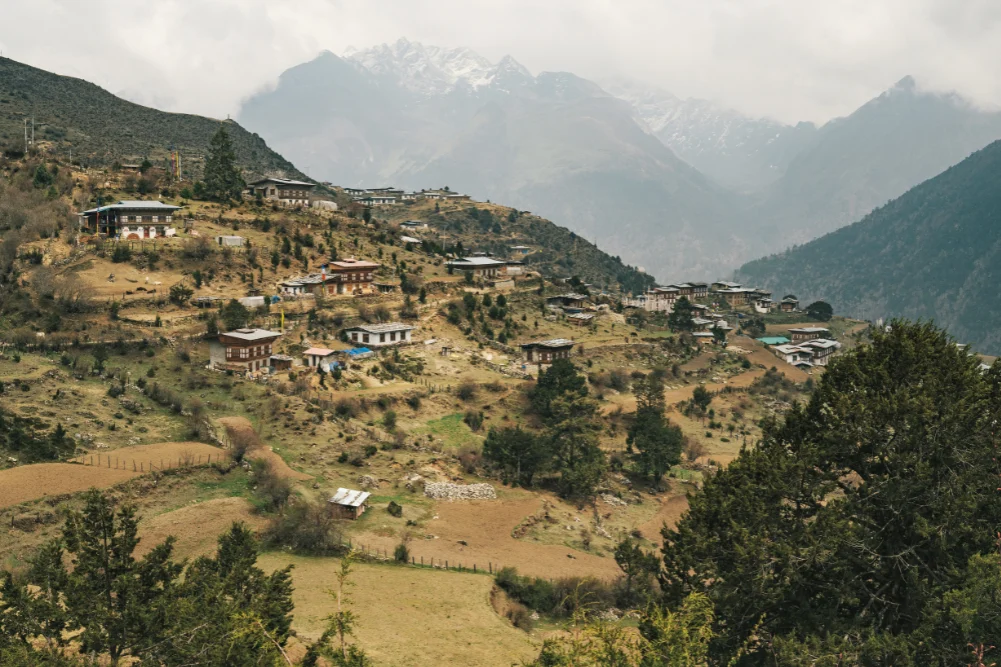
The growing global crisis of burnout and digital saturation has prompted a significant shift in international travel trends, with the Kingdom of Bhutan emerging as a primary destination for those seeking a radical departure from Western consumerist norms. For many high-achieving professionals and parents managed by the relentless pace of the "attention economy," the Himalayan nation offers more than a scenic retreat; it provides a structural alternative to the metric of Gross Domestic Product (GDP). By prioritizing Gross National Happiness (GNH) over economic expansion, Bhutan has maintained a societal framework that emphasizes presence, community, and environmental stewardship—elements increasingly lost in the modernized West.
The Philosophy of Gross National Happiness and the 2022 Index
At the heart of Bhutan’s unique appeal is the Gross National Happiness index, a term coined in 1972 by the Fourth King, Jigme Singye Wangchuck. Unlike most nations that measure progress through fiscal growth, Bhutan’s governance is guided by four pillars: sustainable and equitable socio-economic development, environmental conservation, preservation and promotion of culture, and good governance.
According to the 2022 GNH Index report released by the Centre for Bhutan and GNH Studies, approximately 48.1% of the population is classified as "deeply or extensively happy," while an additional 45.2% are considered "narrowly happy." This data reflects a society where wellbeing is not a luxury product but a constitutional right. This philosophy is enforced through the GNH Commission, which reviews every piece of national legislation. If a proposed policy—whether related to mining, trade, or infrastructure—is deemed harmful to the environment or the collective psychological health of the citizenry, it is rejected.
For the international visitor, this manifests in a landscape remarkably devoid of the hallmarks of globalization. There are no McDonald’s franchises, no towering billboards, and, famously, no traffic lights even in the capital city of Thimphu. This intentional exclusion of Western commercialism creates a vacuum that is filled by the country’s pristine natural environment and deeply entrenched Buddhist traditions.
Chronology of a Cultural Immersion: From Paro to the High Peaks
The journey into Bhutan typically begins with an arrival at Paro International Airport, widely regarded as one of the most challenging landings in the world. Surrounded by 18,000-foot Himalayan peaks, the runway requires pilots to navigate through narrow valleys using visual flight rules. The immediate transition from the high-tech environments of global transit hubs to the silent, mountain-encircled tarmac of Paro serves as the first stage of the sensory "reset" many travelers seek.
Following arrival, the transition into Bhutanese life often involves a move toward spiritual centers. The Dodedrak Monastery, a 12th-century institution located above the Thimphu valley, serves as a primary example of the country’s living history. Accessible only by a steep, two-hour hike, the monastery houses dozens of monks who live a life of disciplined simplicity. For visitors, a night spent in such an environment—characterized by the scent of juniper incense and the rhythmic vibrations of evening prayers—offers a stark contrast to the fragmented, multi-tasking nature of modern life. Observers note that the physiological response to this environment is almost immediate, with participants reporting lowered heart rates and a significant reduction in cortisol-driven anxiety.
Laya: Life at the Edge of the Inhabited World
The pursuit of isolation often leads travelers to Laya, one of the highest and most remote permanent settlements on Earth. Situated at an altitude of 3,800 meters (approximately 12,500 feet), Laya is home to the indigenous Layap people, a community of roughly 1,600 residents with distinct Tibetan roots.
Reaching Laya requires a rigorous multi-day trek, as no roads connect the village to the lower valleys. This geographic isolation has preserved a way of life that revolves around yak herding and high-altitude agriculture. The Layap people are recognizable by their unique attire: women wear black yak-wool jackets and distinctive conical bamboo hats topped with a silver spike.
The community’s social fabric is reinforced by biennial events such as the Bumkor Festival. During this period, the village unites to carry sacred scriptures through the fields to ensure a prosperous harvest. This collective movement—where every member of the community plays a role—highlights a core tenet of Bhutanese wellbeing: the "belonging" factor. In a society that is largely matriarchal and community-driven, the Western concept of the "lonely individual" is virtually non-existent. As noted by local guides, hospitality is not a service but a social obligation; when a family constructs a home, the entire village contributes labor, operating on a system of reciprocal kindness rather than monetary exchange.
Environmental Stewardship and the Carbon-Negative Mandate
Bhutan’s commitment to the environment is not merely philosophical; it is a matter of national law. The constitution mandates that at least 60% of the country’s land remain under forest cover for all time. Currently, that figure stands at approximately 72%. This extensive forestation, combined with the country’s reliance on hydroelectric power, makes Bhutan the world’s first and only carbon-negative country, meaning it absorbs more carbon dioxide than it emits.
For the visitor, this environmental integrity serves as "nature medicine." Research into "forest bathing" (Shinrin-yoku) suggests that the phytoncides released by trees can boost immune function and reduce stress. In Bhutan, where the landscape transitions from lush subtropical forests to alpine peaks, this therapeutic effect is amplified by the absence of noise pollution. The nation’s "High Value, Low Volume" tourism policy, which includes a Sustainable Development Fee (SDF) of $100 to $200 USD per night for international guests, ensures that the environment is not degraded by mass tourism, preserving the very serenity that visitors pay to experience.
Traditional Healing and the Gasa Hot Springs
The Bhutanese approach to health integrates modern medicine with centuries-old traditional practices. Healthcare is provided free of charge to both citizens and visitors, a testament to the government’s commitment to the GNH pillar of equitable development.
A focal point of traditional healing is the Gasa Tsachu (hot springs). Located on the banks of the Mo Chhu River, these springs are believed to have been blessed by a 13th-century saint. Unlike the sterilized, luxury spas of the West, the Gasa hot springs are communal, plain, and deeply integrated into daily life. Locals and travelers soak shoulder-to-shoulder in pools believed to cure ailments ranging from arthritis to skin conditions. This communal experience reinforces the idea that wellbeing is a shared, public resource rather than a private, commercialized commodity.
The Practice of Impermanence: A Different View of Death
Perhaps the most challenging aspect of Bhutanese culture for Westerners to reconcile is the open discussion of death. Bhutanese citizens are encouraged to contemplate death five times a day. While this may seem morbid to those from cultures that prioritize youth and permanence, in Bhutan, it is viewed as a tool for productivity and joy.
By acknowledging the impermanence of life, individuals are encouraged to let go of petty grievances and the "greed" for more material possessions. This cultural mindset creates a slower, more deliberate pace of life. Even the nation’s transit laws reflect this; the maximum speed limit in most areas is a modest 20 to 40 kilometers per hour. This "bullet-train tempo" common in global financial hubs is replaced by a rhythm that allows for reflection and presence.
Broader Impact and Implications for Global Wellbeing
The lessons provided by the Bhutanese model offer a critical critique of the Western "more is better" mantra. The contrast between the satisfaction found in a simple bowl of rice in Laya and the dissatisfaction often felt in a stocked Western supermarket highlights a psychological phenomenon known as the "paradox of choice."
Critics of the Bhutanese model often point to the country’s challenges, including youth unemployment and the struggle to balance tradition with the inevitable encroachment of global digital culture. However, the 2022 GNH data suggests that the core framework remains resilient. For the modern professional returning from a Bhutanese "reset," the impact is often measured in the ability to maintain internal calm amidst external chaos.
The Bhutanese experience suggests that the remedy for burnout is not a temporary cessation of work, but a fundamental recalibration of what constitutes "enough." By observing a society that measures its success by the contentment of its people and the health of its forests, visitors are often forced to confront their own "digital zombie" states. Six months post-visit, many report that while their external circumstances (heavy workloads, family demands) remain the same, their internal response has shifted. They are better equipped to navigate the "delirium" of over-scheduling by returning to the Bhutanese principles of community, presence, and the acceptance of impermanence.
In conclusion, Bhutan stands as a living laboratory for a different kind of modern world. It proves that a nation can remain sovereign, carbon-negative, and culturally distinct while providing a high level of psychological wellbeing for its citizens. As the world grapples with a mental health crisis and environmental degradation, the "Kingdom of Happiness" provides a vital, evidence-based blueprint for a more sustainable and contented human existence.



 Chandra Hamzah
 Tatiana Tantri Indah Sari
 Budi Mulyono
 Anjar Salim

