
 Anjar Salim
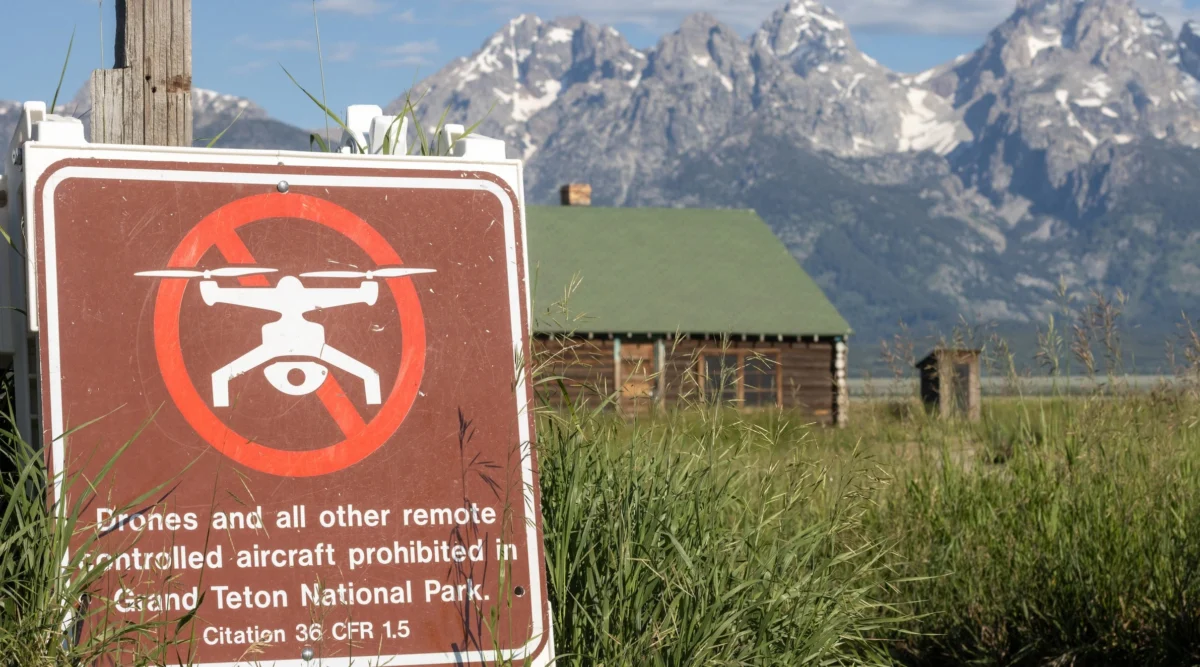
A recently surfaced and subsequently deleted music video featuring a DJ performing high above the landscape of Grand Teton National Park has ignited a renewed public debate regarding the strict federal regulations governing unmanned aircraft systems on public lands. The footage, which quickly spread across digital platforms before being scrubbed from the internet, appears to capture aerial perspectives of a man mixing electronic music on the rugged slopes of Blacktail Butte. This incident has once again thrust the contentious issue of illegal drone usage in national parks into the national spotlight, highlighting a persistent clash between content creators seeking dramatic backdrops and federal land managers tasked with preserving wilderness integrity.
The controversy began to unfold in mid-October when internet users flagged video clips posted to YouTube and shared across regional online forums, including Reddit. The footage showcased a DJ clad in a green jacket spinning tracks against the breathtaking, snow-dusted backdrop of the Teton Range. Local media outlets, notably the Jackson Hole News and Guide, first reported on the digital footprint of the performance, noting that the creator’s online presence was swiftly wiped clean shortly after local conservationists and park advocates began questioning the legitimacy of the filming practices.
Chronology of the Incident and Digital Backlash
The timeline of the Blacktail Butte event underscores the speed at which user-generated content can circulate and disappear in the modern digital ecosystem.
On October 14, the initial video clips were uploaded to public-facing platforms, drawing immediate attention from outdoor enthusiasts and local residents. Commenters on regional discussion boards quickly identified the distinct topography of Blacktail Butte—a prominent 7,000-foot geological feature situated entirely within the boundaries of Grand Teton National Park—and began questioning whether the production team possessed the requisite permits for commercial filming and uncrewed aircraft operations.
As online criticism mounted, with several users encouraging others to report the content to park rangers, the digital footprint of the video began to dissolve. By the time regional outlets and national outdoor publications attempted to reach the content creator for comment, the original channels had been scrubbed and the videos deleted. Despite the removal of the primary sources, cached copies and shared segments continued to circulate, prompting a formal acknowledgement from federal authorities who oversee the region.
The Regulatory Framework: Federal Bans and Severe Penalties
To understand the gravity of the situation, one must examine the strict regulatory environment that governs America’s national parks. In 2014, the National Park Service (NPS) implemented a comprehensive policy prohibiting the launch, landing, or operation of uncrewed aircraft systems across all 433 units under its jurisdiction, unless explicitly authorized in writing by the park superintendent. This blanket ban was enacted under a Director’s Order designed to protect public safety, preserve natural soundscapes, prevent the harassment of wildlife, and avoid conflicts with authorized administrative and emergency aviation activities.
The legal consequences for violating these federal rules are severe. Operating a drone in a national park without a special use permit is classified as a federal misdemeanor. Violators can face severe financial penalties, including fines of up to $5,000, alongside potential prison sentences of up to six months. Despite these steep deterrents, law enforcement rangers frequently encounter recreational and commercial operators who remain unaware of—or choose to ignore—the restrictions in pursuit of viral social media content.
Official Responses and Environmental Concerns
Park officials have repeatedly emphasized that these regulations are not arbitrary, but rather vital for ecological preservation and public safety. Emily Davis, spokesperson for Grand Teton National Park, addressed the recent incident in communications with outdoor media, confirming that park management is aware of the footage, though specific details regarding active investigations or citations remain confidential.
"Drones can disturb or displace wildlife, create noise, detract from the natural soundscape and scenic views, and pose safety hazards to visitors," Davis explained, highlighting the multifaceted impact of unauthorized flights. Furthermore, Davis underscored a critical operational risk that often goes unrecognized by casual operators: "Unauthorized flights can also ground aerial search-and-rescue missions and wildland firefighting operations."
In mountainous environments like the Teton Range, where rapid weather changes and rugged terrain frequently necessitate helicopter deployment for backcountry rescues or wildfire suppression, the presence of rogue drones can completely halt emergency response capabilities, potentially endangering human lives. Ecologically, the sudden mechanical buzzing and unpredictable movement of uncrewed aircraft can induce acute stress in native fauna, interrupting critical feeding, mating, and rearing behaviors.
A Decade of Conflict: Historical Precedents in Wyoming’s Parks
The recent controversy at Grand Teton is far from an isolated occurrence; rather, it represents the latest chapter in a long-standing struggle between park managers and drone enthusiasts across Wyoming’s premier conservation areas. Yellowstone National Park, which shares a contiguous ecosystem with Grand Teton, has experienced numerous high-profile drone infractions over the past decade.
In May, park visitors and wildlife advocates expressed outrage after an unauthorized drone was filmed flying within feet of a famous grizzly sow, known as Beryl, and her two cubs along a heavily trafficked roadway in Yellowstone. Regional outlets reported widespread condemnation of the operator, whose actions forced the habituated wildlife into unnecessary stress and created dangerous roadside congestion.
The historical record features even more destructive incidents. In 2014, the same year the nationwide NPS ban was instituted, a recreational drone pilot crashed an aircraft directly into Yellowstone’s fragile and iconic Grand Prismatic Spring, drawing national condemnation and subsequent legal action. Later that same year, another pilot lost control of a drone, plunging it into Yellowstone Lake.
Grand Teton has likewise grappled with enforcement challenges. In 2017, park rangers issued a public plea for assistance in identifying a drone operator who brazenly hovered an aircraft directly over a family of grizzly bears near Oxbow Bend—a premier wildlife-viewing corridor. Despite investigative efforts, the operator was never identified or apprehended at the scene, illustrating the immense difficulty park law enforcement faces in policing vast backcountry expanses where illegal flights can be initiated and concluded in a matter of minutes.
Broader Implications for Content Creators and Public Lands
The intersection of social media culture, outdoor recreation, and federal land management has created a complex regulatory and ethical challenge. As platforms that reward visual spectacle continue to grow, content creators face increasing economic and social incentives to capture unique, high-risk perspectives of protected wilderness areas.
Industry analysts and conservationists argue that educational outreach alone has proven insufficient to curb illegal flights, suggesting that stricter enforcement, more robust monitoring technologies, and increased accountability from hosting platforms will be necessary to protect public lands. When creators wipe their internet presence following an alleged violation, it highlights an awareness of wrongdoing, yet often shields them from immediate legal accountability unless law enforcement can independently secure digital evidence and establish identity.
Ultimately, the consensus among federal agencies, conservation organizations, and responsible outdoor recreationists remains absolute: national parks are set aside as sanctuaries for nature and quiet human reflection, not as aerial runways for commercial production or recreational gadgets. As Grand Teton National Park reviews the recent Blacktail Butte footage, the incident serves as a stark reminder that the pursuit of digital notoriety cannot supersede federal law or the preservation of America’s most treasured natural landscapes.


 Tatiana Tantri Indah Sari

 Dwi Wanna

 Lukman Taruna Persada Ramadan
 Budi Mulyono
