
 Anjar Salim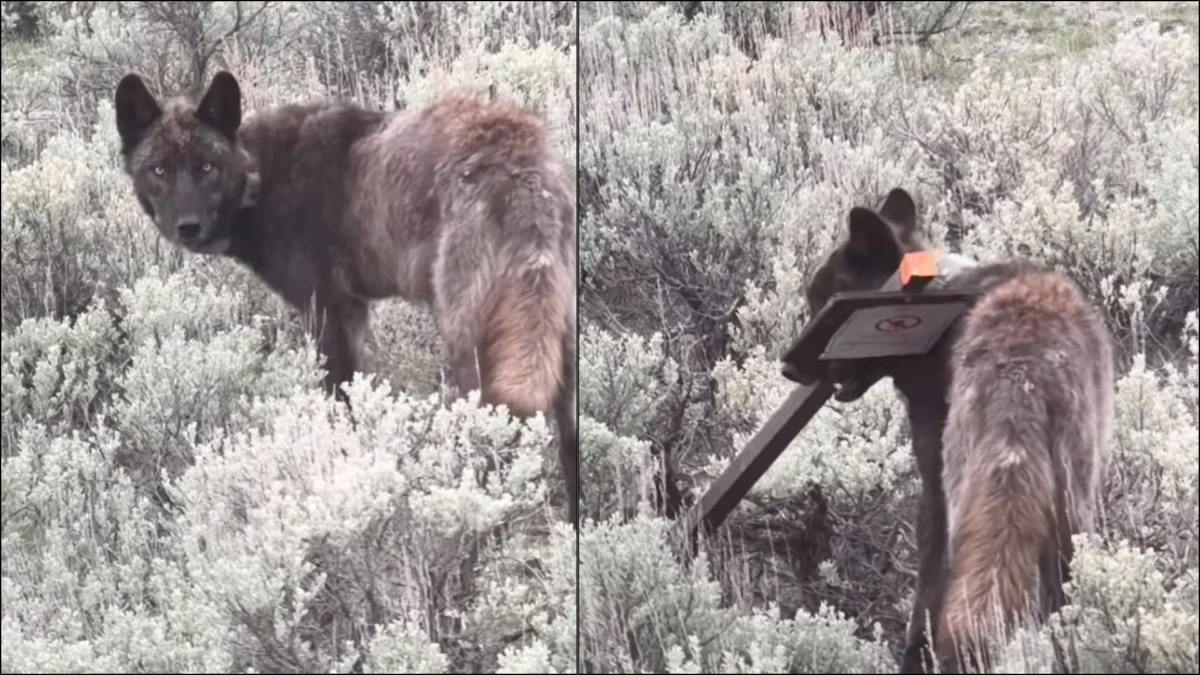
A yearling wolf pup belonging to the famous Junction Butte pack has become the center of international attention after being photographed and filmed carrying a grizzly bear warning sign through the northern range of Yellowstone National Park. The incident, captured by a field researcher on April 14, 2026, has provided wildlife biologists and the general public with a rare, lighthearted glimpse into the playful social development of one of the world’s most closely monitored apex predators. While the image has garnered significant social media engagement for its perceived irony, it serves as a poignant illustration of the behavioral ecology of young wolves and the ongoing interspecies dynamics within the Greater Yellowstone Ecosystem.
Chronology of the Incident in the Northern Range
The encounter took place during a routine monitoring session conducted by Taylor Rabe, a wolf technician for the nonprofit conservation organization Yellowstone Forever. Rabe, who works in conjunction with the National Park Service (NPS) to track pack movements and health, was positioned along the Northeast Entrance Road near Gardiner, Montana, when she observed a group of year-old wolves.
According to Rabe’s field notes and subsequent reports, a black, collared yearling separated from its siblings to investigate a piece of park infrastructure. The object was a standard "Grizzly Bear Warning" sign, which had been strategically placed by the park’s bear management team to alert hikers and visitors of a nearby carcass—a high-risk area for grizzly activity. Rather than avoiding the area, the curious yearling pup uprooted the sign and proceeded to treat it as a "trophy," carrying it across the road to rejoin its pack members.
The yearling was observed gnawing on the wooden post and the sign itself, effectively turning the safety equipment into a chew toy. This behavior continued for several minutes before the pup eventually abandoned the sign to follow the rest of the pack into the dense timber of the Lamar Valley. The event was documented via high-definition video and photography, which Rabe later shared to highlight the often-unseen "adolescent" phase of wolf development.
The Junction Butte Pack: A Legacy of High Visibility
The pup involved in the incident is a member of the Junction Butte pack, a group that has occupied the northern range of Yellowstone since its formation in 2012. The pack is widely regarded as the most-viewed wolf pack in the world due to its tendency to den and hunt in the open vistas of the Lamar Valley and Little America, areas easily accessible to tourists and researchers.
As of the 2025-2026 winter count, the Junction Butte pack consisted of approximately 12 to 15 individuals, though pack numbers fluctuate based on pup survival rates and the dispersal of older sub-adults. The pack is known for its "feisty" and highly social nature, often engaging in visible play and communal hunting within sight of park roads. Because their territory includes the Northeast Entrance Road, the pack serves as a primary educational tool for the National Park Service, allowing thousands of visitors annually to observe natural wolf behavior from a safe distance.
The specific pup caught with the sign is a yearling, meaning it has survived its first precarious year of life but has not yet reached full reproductive or social maturity. Yearlings occupy a unique niche in the pack hierarchy; they are large enough to participate in some hunts but still exhibit the high energy and curiosity characteristic of younger pups.
The Biological Significance of Play and Object Manipulation
While the image of a wolf carrying a grizzly sign is visually striking, wildlife biologists emphasize that such behavior is rooted in essential developmental milestones. According to the International Wolf Center (IWC), play is a critical component of a wolf’s transition from a dependent pup to a functional hunter.
"Pups and yearlings will often play with ‘toys’ such as bones, feathers, or the hides of deceased animals," the IWC notes in its behavioral literature. "They ‘kill’ these objects repeatedly, shaking them and carrying them as trophies. This is not merely entertainment; it is the refinement of the motor skills and jaw strength required for hunting small and large prey alike."
In this instance, the grizzly warning sign served as a novel stimulus. Wolves are highly intelligent and possess a keen sense of curiosity regarding new objects in their environment. By engaging with the sign, the yearling was practicing "object manipulation," a cognitive process that helps the animal understand the physical properties of its world. Furthermore, because wolves are highly social, the act of carrying a "trophy" often elicits play-responses from other pack members, strengthening the social bonds and hierarchy within the group.
Interspecies Competition: Wolves and Grizzlies
The presence of the sign itself points to a deeper ecological reality in Yellowstone: the competitive relationship between gray wolves and grizzly bears. The sign was placed because of a nearby carcass, likely an elk or bison. In the northern range, carcasses are the primary sites of "kleptoparasitism," a biological interaction where one species steals food from another.
Grizzly bears frequently usurp wolf kills, using their superior mass to drive packs away from a carcass. Conversely, large wolf packs can sometimes harass a lone bear until it abandons a find. The fact that a wolf pup was playing with a sign meant to warn humans of a bear underscores the constant overlap of these two species. To the wolf pup, the sign was not a warning but a byproduct of a shared environment where the scent of a bear—and the food associated with it—is a daily reality.
The Role of Yellowstone Forever and Park Management
The documentation of this event was made possible through the efforts of Yellowstone Forever, the official nonprofit partner of Yellowstone National Park. The organization funds the Yellowstone Wolf Project, which is responsible for the radio-collaring, aerial monitoring, and ground-based observation of the park’s wolf population.
The yearling in the photograph was wearing a radio collar, a vital tool for researchers. These collars provide data on territory size, mortality rates, and pack transitions. This data is essential for the NPS to manage the park’s ecosystem effectively, especially as wolf populations face external pressures such as hunting outside park boundaries and fluctuating prey availability.
The incident also highlights the challenges of maintaining park infrastructure in a wilderness setting. Wildlife frequently interacts with man-made objects; bison have been known to rub against and topple signs, while bears often damage "bear-proof" trash receptacles. The misappropriation of the grizzly sign by a wolf pup is a reminder that in Yellowstone, human management tools are always subject to the whims of the resident wildlife.
Broader Implications for Wildlife Conservation
The viral nature of the "sign-stealing" wolf pup comes at a time when wolf management remains a contentious issue in the American West. Beyond the borders of Yellowstone, gray wolves are subject to varying state laws regarding hunting and trapping. Within the park, however, they are protected, allowing for the expression of natural behaviors that are rarely seen in more pressured environments.
Public interest in individual wolves, such as those in the Junction Butte pack, plays a significant role in conservation. By humanizing the animals through stories of play and curiosity, organizations like Yellowstone Forever can build public support for habitat preservation. However, researchers also warn against over-anthropomorphizing these animals. While the yearling’s actions appear "funny" to a human audience, they are the actions of a wild predator honing the skills necessary for survival in a brutal environment.
Conclusion: The Unscripted Reality of Yellowstone
The image of the Junction Butte yearling and its "stolen" sign remains a testament to the unscripted nature of Yellowstone National Park. It serves as a reminder that despite the scientific monitoring, the radio collars, and the designated viewing pullouts, the park is a wild ecosystem where the inhabitants do not adhere to human boundaries or warnings.
As the yearling grows into an adult member of the pack, the skills it practiced with a wooden sign will eventually be applied to the hunt, ensuring the continued survival of the Junction Butte lineage. For the thousands of visitors who flock to the Lamar Valley each year, the story of the pup and the sign provides a deeper connection to the wild—a reminder that in the heart of Yellowstone, the animals are truly the ones in charge.
The National Park Service has since replaced the sign, ensuring visitor safety is maintained, while the Junction Butte pack continues its seasonal movements, oblivious to its newfound digital fame. The incident stands as a brief, bright moment in the complex, ongoing narrative of wolf recovery in the American West.




 Chandra Hamzah
 Tatiana Tantri Indah Sari
 Budi Mulyono

