
 Walid Sujud Trenggono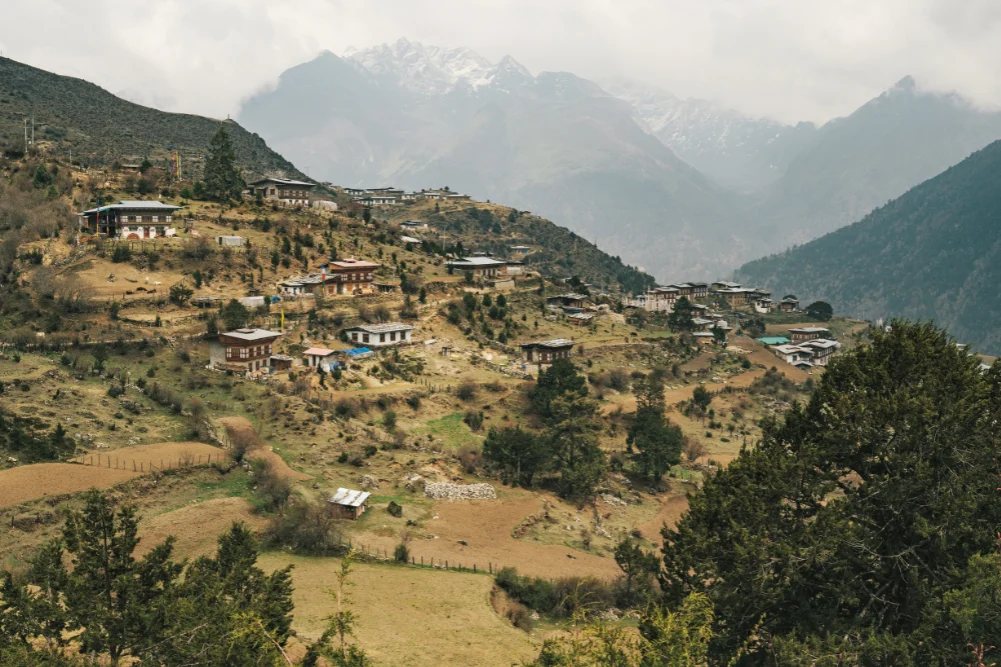
The modern epidemic of chronic exhaustion frequently reaches a breaking point in the quietest of domestic spaces. For one solo-parenting entrepreneur managing two separate businesses alongside eldercare responsibilities, the decisive moment arrived not during a catastrophic business failure or a major health crisis, but through a poignant reprimand from her young son: "Mummy, mummy, you’re not listening. Put your phone away." This familiar digital intrusion laid bare a reality of modern life: the state of being perpetually connected yet fundamentally absent. Stretching resources, time, and emotional bandwidth to their absolute limits, the realization set in that a standard vacation would not suffice. The intervention required was not merely a break from routine, but a complete recalibration of existence before burnout precipitated total collapse.
Choosing Bhutan as the destination for this midlife reset defied conventional wellness tourism paradigms. Eschewing the Western inclination toward silent retreats, luxury linen lounging, and green juice cleanses, the traveler sought out a nation long reputed for operating in deliberate defiance of contemporary hyper-capitalism. Nestled quietly in the Eastern Himalayas, the Kingdom of Bhutan has historically evaluated national progress not through standard macroeconomic indicators like profit margins or Gross Domestic Product, but through an explicit framework known as Gross National Happiness.
Arrival and Historical Context
The geographic and political realities of the Kingdom of Bhutan immediately underscore its distinct position in the global community. Wedged between the geopolitical giants of China and India, Bhutan maintains a population of approximately 760,000 citizens. Having notably avoided colonization throughout its history, the country has pursued a uniquely measured approach to modernization.
The timeline of Bhutan’s exposure to the outside world highlights its deliberate caution:
- 1970s: Foreign visitors were first permitted to enter the Himalayan kingdom under strictly regulated tourism policies.
- 1999: Television and the internet were officially introduced to the general public, marking the arrival of digital connectivity.
- Present Day: Bhutan stands as the world’s first and only carbon-negative country, absorbing more carbon dioxide than it emits, largely due to constitutional mandates requiring forest cover to remain above 60 percent.
Upon landing at Paro International Airport—widely recognized as one of the most challenging commercial aviation approaches in the world due to the surrounding 18,000-foot Himalayan peaks—passengers experienced an immediate collective pause. Rather than rushing toward baggage claim, travelers stood in stunned silence on the tarmac, enveloped by the immense scale of the mountain range. This initial quiet set the psychological tone for the expedition.
Chronology of the Ascent: Monasteries and Remote Communities
The journey began with a physical and symbolic descent into traditional monastic life at the 12th-century Dodedrak Monastery. Eschewing modern transport, the itinerary required an arduous two-and-a-half-hour trek up a steep mountain slope, compounded by adverse weather conditions. Reaching the monastery at twilight revealed an ancient structure illuminated by the soft glow of butter lamps, accompanied by the sensory grounding of thick incense.
Inside the temple, the physical vibrations of burgundy-robed monks chanting ancient scriptures in unison offered an immediate physiological intervention. Heart rates slowed, muscle tension dissipated, and the mental noise of digital dependency began to recede.
However, the core of the expedition demanded passage to one of the most remote inhabited settlements on Earth: the high-altitude village of Laya. Perched at 3,800 meters above sea level and accessible exclusively via foot or pack animal, Laya is home to roughly 1,600 Layap people—an indigenous community with distinct Tibetan heritage.
Residing in traditional stone dwellings beneath snow-capped peaks such as the sacred Tiger’s Peak, the community exemplifies a lifestyle rooted in mutual aid and collective survival. During a homestay with Am Pem, a recently widowed village resident, the stark contrast between Western consumerism and indigenous contentment became starkly apparent.
Coinciding with the visit was the Bumkor Festival, a biennial celebration featuring sacred processions, traditional music, and communal dancing. Interactions with local guides, such as Pema Wangchuk, emphasized a societal ethos centered on mutual responsibility. When asked about her secret to a long and fulfilling life, Am Pem offered a simple maxim: "To be happy, don’t be greedy. Make the most of what you have. In our village, if we have enough rice to eat, then we are happy."
Institutional Frameworks and Gross National Happiness
Bhutan’s cultural emphasis on community well-being is not merely a philosophical preference; it is codified into public policy. Established in the 1970s by the fourth King of Bhutan, Jigme Singye Wangchuck, the Gross National Happiness (GNH) index operates as a formal metric that supersedes economic output.
The GNH framework evaluates policy proposals across nine distinct domains:
- Psychological well-being
- Health
- Education
- Time use
- Cultural diversity and resilience
- Good governance
- Community vitality
- Ecological diversity and resilience
- Living standards
Under this system, any proposed government policy or commercial project undergoes rigorous screening to determine its potential impact on culture, community, and the environment. If a project poses a threat to social harmony or ecological preservation, it is systematically rejected. According to recent GNH surveys, nearly half of the population explicitly self-identifies as happy, supported by universal free healthcare, universal free education, and robust environmental protections.
This societal orientation toward collective welfare manifests in everyday practices, such as the communal utilization of the Gasa hot springs. Long associated with traditional healing properties attributed to a 13th-century saint, the springs serve as a shared civic space where citizens from all walks of life gather to restore physical and mental health.
Broader Implications and Long-Term Impact
The implications of Bhutan’s socio-cultural model offer a critical counter-narrative to contemporary burnout culture prevalent in industrialized nations. Public health research consistently demonstrates that immersion in natural environments and tight-knit social networks significantly reduces cortisol levels, lowers blood pressure, and mitigates the symptoms of chronic anxiety.
Furthermore, Bhutan’s cultural normalization of mortality—where citizens are encouraged to contemplate impermanence multiple times a day—challenges the Western tendency to pathologize or conceal death. Rather than breeding morbidity, this constant awareness reframes time as a finite and precious resource, fostering gratitude and diminishing superficial ambition.
Six months following the return to conventional life—marked by relentless schedules, professional pressures, and digital temptations—the systemic effects of the journey remained perceptible. While old habits inevitably resurfaced, the internal baseline had shifted. The psychological anchor provided by the memory of fluttering prayer flags, monastic chants, and the profound simplicity of Laya offered a durable mechanism to counteract the demands of modern productivity.
Ultimately, the expedition to Bhutan did not provide a permanent escape from responsibility, but rather a renewed capacity to recognize sufficiency: the ability to identify an adequate baseline of existence and remain firmly present within it.



 Anjar Salim
 Chandra Hamzah
 Tatiana Tantri Indah Sari
 Budi Mulyono
 Lukman Taruna Persada Ramadan
