
 Chandra Hamzah
Despite a global landscape marked by economic headwinds and geopolitical instability, a significant segment of travelers is demonstrating an unwavering commitment to cruising, with a notable shift towards luxury options and all-inclusive packages. An exclusive sentiment survey conducted recently by Cruise Passenger reveals that cruise passengers are emerging as some of the most resilient travelers in the current market, actively booking holidays and upgrading their experiences when special offers permit. This trend challenges broader industry perceptions and highlights a unique consumer behavior within the cruise sector.
The survey, which captured the sentiments of active cruise enthusiasts, unveiled a strong appetite for elevated travel experiences. A substantial portion of respondents, exceeding one-third, indicated that they embark on two to five cruises annually, underscoring a dedicated and frequent cruising demographic. Furthermore, forward booking patterns suggest a long-term planning horizon, with nearly 50% of participants securing their voyages 12 months in advance, and an additional 35% making reservations four to nine months ahead of their travel dates. This proactive approach to booking, even amidst economic uncertainty, points to a perception of cruises as a stable and valuable form of leisure.
The All-Inclusive Appeal and Value Proposition
A dominant theme emerging from the survey is the widespread desire for all-inclusive holiday packages. This preference suggests a seeking of predictability and comprehensive value, particularly in an environment where discretionary spending is under scrutiny. For many, an all-inclusive cruise represents a bundled offering that simplifies budgeting and eliminates unexpected costs, thereby enhancing the perceived value of the vacation.
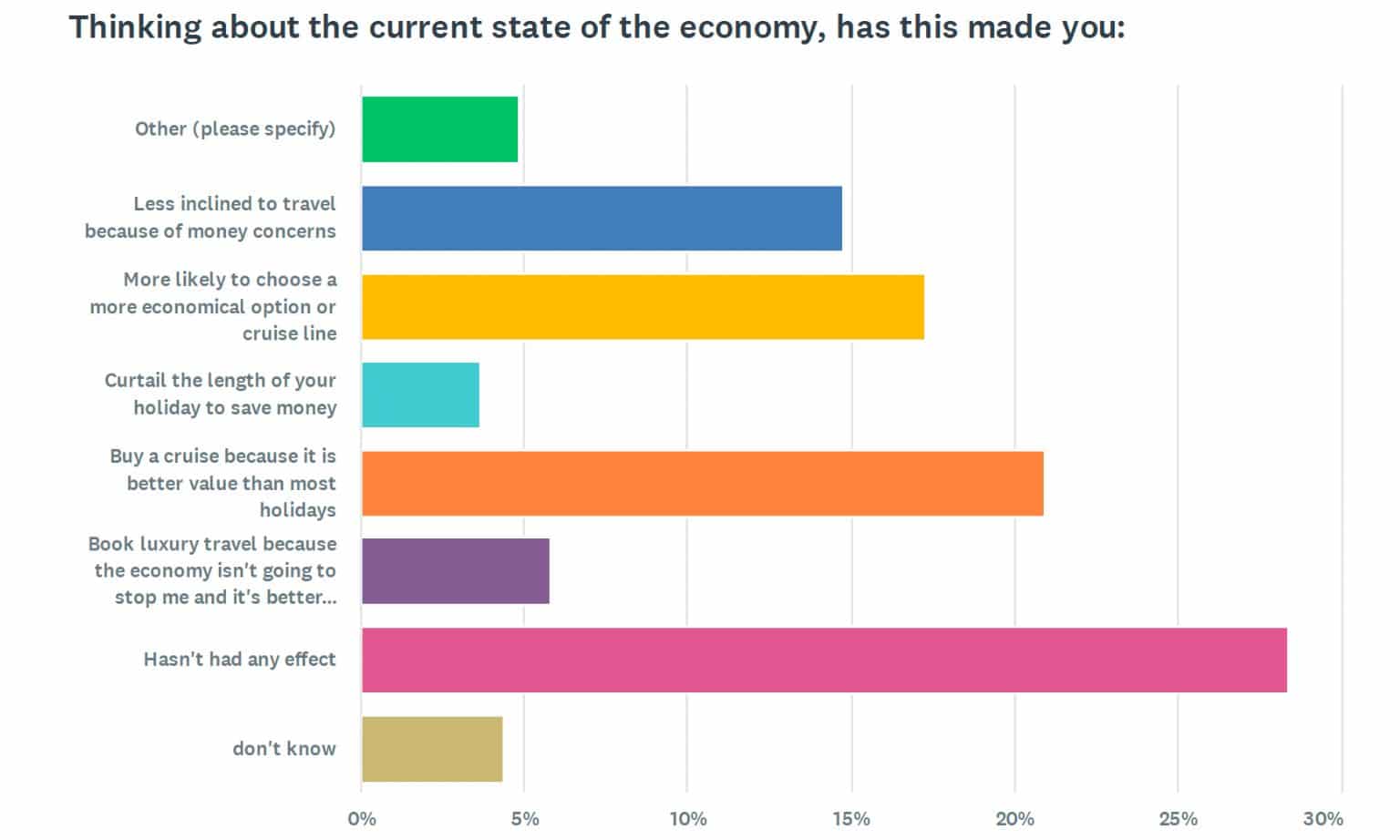
When questioned about the impact of the current economic climate on their travel decisions, the survey revealed a nuanced picture. While 17% of respondents acknowledged adjusting their budgets in search of more wallet-friendly options, a larger cohort expressed a different perspective. For these travelers, cruising, especially when opting for premium or luxury segments, is increasingly viewed as an exceptional value proposition. The all-encompassing nature of a cruise, which typically includes accommodation, dining, entertainment, and transportation between destinations, can often present a more cost-effective and hassle-free alternative to piecing together a similar multi-destination land-based holiday. This perception of inherent value, coupled with the allure of a curated and often luxurious experience, appears to be a key driver of continued booking activity.
Evolving Destinations and the Rise of Experiential Cruising
Beyond the booking trends, the survey also illuminated a significant evolution in destination preferences. While traditional favorites like Europe remain popular, a new wave of aspirational travel is taking hold. The survey identified a surge in interest for destinations such as Japan, South America, and Antarctica, signaling a growing demand for unique and immersive experiences. This shift reflects a broader trend in the travel industry towards "experiential travel," where the focus is on discovery, adventure, and cultural engagement rather than mere sightseeing.
Cruise lines are increasingly responding to this demand by expanding their itineraries to include more remote and exotic locales, offering specialized shore excursions, and enhancing onboard programming to reflect the cultural richness of their destinations. The appeal of Antarctica, for instance, lies in its unparalleled natural beauty and the opportunity for unique wildlife encounters. Similarly, Japan offers a rich tapestry of ancient traditions and modern marvels, while South America presents diverse landscapes and vibrant cultures. This expansion into less conventional cruise regions indicates a maturing cruise market that caters to seasoned travelers seeking novel adventures.
The Digital Shift in Booking and Inspiration
A notable finding from the survey pertains to the changing landscape of how cruise passengers gather information and make bookings. In a clear departure from historical patterns, there has been a significant increase in travelers booking directly with cruise lines, surpassing traditional travel agents for the first time in this survey’s data. While travel agents remain a vital part of the travel ecosystem, this trend suggests that a growing number of consumers are taking a more proactive and informed approach to their cruise planning.
The primary sources of inspiration for these travelers are increasingly digital. CruisePassenger.com.au and similar specialized travel websites have emerged as leading platforms for research and discovery. This indicates a strong reliance on trusted online voices and platforms that offer in-depth reviews, destination guides, and comprehensive cruise information. Mainstream newspaper travel supplements, once a cornerstone of travel inspiration, are showing a decline in influence, reflecting a broader shift in media consumption habits. Interestingly, artificial intelligence (AI) searches are beginning to surface as a nascent source of inspiration, hinting at future trends in travel planning. This digital-first audience is characterized by its trust in specialist travel content creators and its ability to navigate online resources to curate their ideal vacation.
The Luxury Upgrade and the Value of Time
The survey data strongly suggests that a significant portion of cruise passengers are not just traveling, but traveling better. The trend towards luxury and premium cruise segments is pronounced, with many travelers actively seeking upgrades when opportunities arise. This indicates that while economic concerns are present, they are not necessarily deterring passengers from investing in high-quality vacation experiences. Instead, the focus appears to be on maximizing value and enjoyment, with luxury perceived as an achievable and desirable component of their holiday plans.
The allure of luxury cruising often lies in the enhanced amenities, personalized service, and exclusive experiences offered onboard. From gourmet dining and spacious suites to bespoke shore excursions and attentive staff, luxury lines provide a comprehensive package that appeals to those seeking a refined and indulgent getaway. This pursuit of elevated experiences, even in challenging economic times, underscores the enduring appeal of cruising as a means of escape and rejuvenation.
Beyond the Ship: The Rise of Integrated Travel
Another significant trend highlighted by the survey is the increasing importance of experiences that extend beyond the cruise itself. Passengers are no longer viewing the cruise as the sole component of their holiday but rather as a central element of a broader travel narrative. This is evidenced by a growing interest in pre- and post-cruise tours and extensions. Cruise lines that offer integrated travel packages, encompassing land-based adventures and cultural immersions, are particularly well-positioned to capture this evolving market.
The survey indicates that travelers are actively seeking opportunities to explore destinations more deeply, with a strong preference for immersive and authentic experiences. This includes activities such as culinary tours, historical site explorations, and adventure-based excursions. The desire to connect with local cultures, learn new skills, and create lasting memories is a powerful motivator for this segment of travelers. This shift towards integrated, experience-led travel signifies a move away from passive consumption towards active participation in the discovery of new places and cultures.
Analysis and Implications for the Cruise Industry
The findings of this exclusive sentiment survey offer a compelling snapshot of the contemporary cruise passenger. The resilience of this demographic, their proactive booking behavior, and their embrace of luxury and all-inclusive options paint a picture of a market segment that prioritizes value, experience, and predictability.
The increasing shift towards direct bookings with cruise lines suggests a need for cruise companies to further invest in their direct-to-consumer channels, offering seamless online booking experiences and personalized customer service. Simultaneously, the continued relevance of specialist travel websites underscores the importance of digital content creation and online presence for travel inspiration.
The evolving destination preferences signal an opportunity for cruise lines to diversify their offerings and cater to a more adventurous and culturally curious clientele. The growing demand for integrated travel experiences, encompassing pre- and post-cruise extensions, also presents a valuable avenue for revenue generation and enhanced customer satisfaction.

In conclusion, while the global economic climate may present challenges, the cruise industry appears to be in a strong position, buoyed by a dedicated and increasingly discerning passenger base. The emphasis on luxury, all-inclusive packages, and enriching experiences, coupled with a digitally savvy approach to planning and booking, suggests a dynamic and evolving future for cruising. Cruise lines that can effectively cater to these evolving needs and preferences are likely to thrive in this robust and resilient market segment.




 Tatiana Tantri Indah Sari
 Budi Mulyono
 Anjar Salim
